

Artificial Intelligence and Natural Language Processing
Artificial Intelligence (AI) is a branch of computer science that seeks to develop systems capable of mimicking and enhancing human abilities such as reasoning, learning, and perception. One of its most fascinating subareas is Natural Language Processing (NLP).
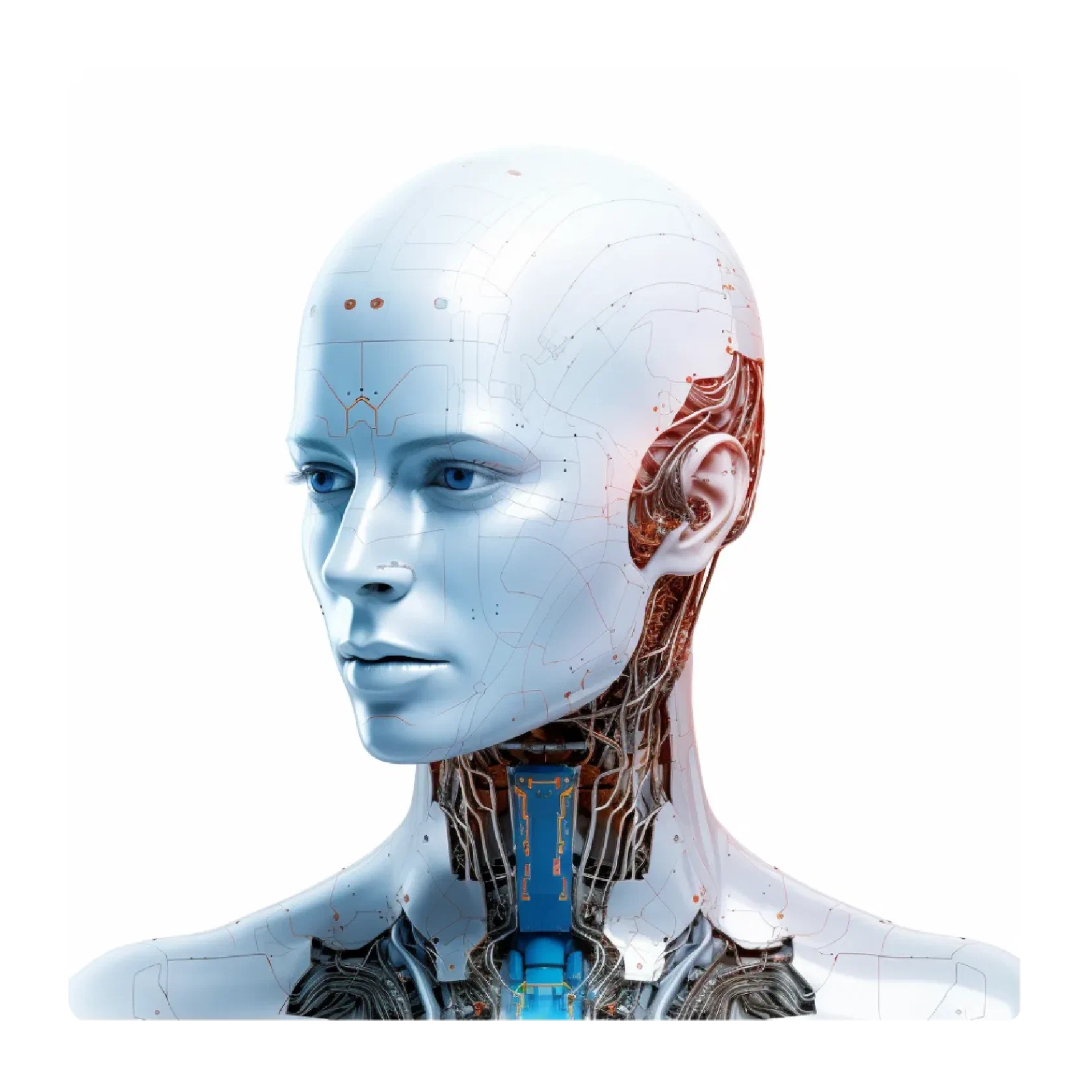
Artificial Intelligence (AI) is a branch of computer science that seeks to develop systems capable of mimicking and enhancing human abilities such as reasoning, learning, and perception. One of its most fascinating subareas is Natural Language Processing (NLP), dedicated to understanding and interpreting human language, allowing machines and programs to interact with people more efficiently and intuitively. NLP encompasses everything from syntactic and semantic analysis of words to the generation of coherent and meaningful text, enabling the creation of virtual assistants, automatic translation systems, and other applications that facilitate communication and information access in our daily lives.
About the Area Coordinators
Prof. Sergio Antônio Andrade de Freitas
More About the Coordinator
Prof. André Luiz Peron Martins Lanna
More About the Coordinator
Research Team
Master’s degree
Lucas Pereira Gomes Linard
Evaluation of gamification in software code quality
Master's Thesis in Applied Computing, University of Brasília (Brazil)•2024
Advisor(s)Bruno Mello Andrade
Gamification in Software Engineering: Evaluation of engagement in Information Technology teams in a Software Factory
Master's Thesis in Applied Computing, University of Brasília (Brazil)•2023
Advisor(s)
Bachelor’s Thesis
Daniel Rodrigues da Rocha
Learning Analytics for the CEDIS Ecosystem
Bachelor of Software Engineering - University of Brasília (Brazil)•2027
Advisor(s)Davi Rodrigues da Rocha
Learning Analytics for the CEDIS Ecosystem
Bachelor of Software Engineering - University of Brasília (Brazil)•2027
Advisor(s)André Lopes de Sousa
Artificial intelligence and law
Bachelor of Software Engineering - University of Brasília (Brazil)•2026
Advisor(s)Christian Hirsch Santos
Impact of the use of AI in a Software Engineering course
Bachelor of Software Engineering - University of Brasília (Brazil)•2026
Advisor(s)Ian Lucca Soares Mesquita
Impact of the use of AI in a Software Engineering course
Bachelor of Software Engineering - University of Brasília (Brazil)•2026
Advisor(s)
CEDIS volunteer
Danielle Soares Da Silva
Development of AI-based solutions
Bachelor of Software Engineering - University of Brasília (Brazil)•2025
Advisor(s)Co-advisor(s)Danilo de Melo Ribeiro
Development of AI-based solutions
Bachelor of Software Engineering - University of Brasília (Brazil)•2025
Advisor(s)Co-advisor(s)Edson Pereira Roldao Filho
Development of AI-based solutions
Bachelor of Software Engineering - University of Brasília (Brazil)•2025
Advisor(s)Co-advisor(s)Kaleb de Souza Macedo
Development of AI-based solutions
Bachelor of Software Engineering - University of Brasília (Brazil)•2025
Advisor(s)Co-advisor(s)Matheus de Alcantara Da Silva Campos
Development of AI-based solutions
Bachelor of Software Engineering - University of Brasília (Brazil)•2025
Advisor(s)Co-advisor(s)Yuri Souza de Andrade Castro Silva
Development of AI-based solutions
Bachelor of Software Engineering - University of Brasília (Brazil)•2025
Advisor(s)Co-advisor(s)
Master’s degree
- 2025
Diego Emanuel Ferreira da Rocha
Automated identification of elementary processes through HTTP request analysis
Master's Thesis in Applied Computing, University of Brasília (Brazil)
Advisor(s) - 2024
Arthur Rocha Temporim de Lacerda
Gamified Chatbot Management Process: A way to build gamified chatbots
Master's Thesis in Applied Computing, University of Brasília (Brazil)
Advisor(s)TopicsChatbot development frameworks provide a range of construction methods; however, established processes like the Chatbot Management Process (CMP) often lack activities specifically tailored to enhance user engagement. This thesis presents the Gamified Chatbot Management Process (GCMP), an extension of the CMP that integrates and adapts activities to boost user interaction with chatbots. Three iterations of the GCMP were created, each incorporating enhancements driven by the Goal-Question-Metric (GQM) methodology. This iterative approach supported the continuous evaluation and evolution of the process. Experiments with real users indicated positive engagement, with all participants successfully meeting the set objectives. Furthermore, the average deployment time was reduced by 66% from the initial to the final version. User assessments also gave top ratings for the quality of responses generated by the chatbot. These results demonstrate the effectiveness of the proposed GCMP. The findings suggest a strong positive correlation between implementing the GCMP and improvements in developing gamified chatbots. The advances in both chatbot functionality and gamification techniques highlight the potential for widespread adoption of the GCMP as a reliable and effective approach for creating gamified chatbots. - 2024
Éber Junio Borges Moreira
Master's Thesis in Applied Computing, University of Brasília (Brazil)
Advisor(s)The scheduling of academic resources in higher education institutions is a highly complex problem, involving the allocation of classes, professors, time slots, and physical spaces to meet multiple institutional constraints and preferences. This paper presents the SARA model (Academic Resource Scheduling System), designed to offer flexibility and adaptability to the specific needs of higher education institutions. The research was conducted in two main stages: a systematic literature review and the proposal of the SARA model. The systematic review enabled the mapping of widely used strategies, algorithms, and constraints in the literature, providing theoretical foundations for the model's development. The SARA proposal integrates features such as customization, integration with academic systems, and the application of optimization algorithms, promoting a comprehensive and adaptable approach to scheduling in university environments. The model was validated through a case study at the University of Brasília (UnB), in a large-scale and highly complex environment. Preliminary results demonstrated the model's feasibility and effectiveness in meeting the institution's specific demands, highlighting its potential applicability in various institutional contexts. The research contributes to theoretical and practical advancements in academic management, presenting a solution that combines methodological rigor with practical applicability. - 2023
Edmilson Cosme da Silva
Master's Thesis in Applied Computing, University of Brasília (Brazil)
Advisor(s)Researchers have been investigating attrition in higher education, identifying two categories - students who leave the university and those who abandon higher education altogether, negatively affecting institutions, students, and society. Since 1995, in Brazil, the creation of ANDIFES has led to more frequent studies on graduation, retention, and attrition in Brazilian universities, focusing on institutional attrition, characterized by a student's departure from their original course. The University of Brasília (UnB) has implemented strategies to increase student retention in undergraduate courses. This work aimed to develop and test an analysis model to predict attrition in face-to-face courses, through a Systematic Literature Review to identify impact factors and define indicators extracted from UnB's academic systems. The model, named MAGRA, combines indicators with machine learning algorithms to identify students at risk of dropping out. Tests conducted at the Faculdade de Ciências e Tecnologias em Engenharia (FCTE) and UnB indicated that enrollment frequency in subjects could predict completion difficulties. The research suggests that to improve the early identification of at-risk students, adjustments in feedback mechanisms, the inclusion of new systems, improvement in data quality, and adjustments in algorithm parameters are necessary. - 2010
Débora Zupeli Bossois
Text categorization methodology from unlabeled documents using an anaphora resolution process
Master's Thesis in Informatics, Federal University of Espirito Santo (Brazil)
Advisor(s)With the ongoing expansion of electronic textual content, there's a need to organize all this information in a manageable way. Hence, the process of text categorization was developed to ease the manipulation and retrieval of information by dividing it into thematic categories. There are various approaches to achieving an automatic text categorizer, among which the supervised paradigm is the most traditional. Although supervised methodology shows precision comparable to human experts, the requirement for a pre-classified corpus can be a limiting factor in some applications. In these cases, a semi or unsupervised solution, which doesn't demand a complete and well-formed training set for categorizer construction, can be applied; instead, unlabeled documents are provided to the method. Both supervised learning paradigms and semi or unsupervised paradigms typically build a representation of texts based solely on term occurrence, not considering semantic factors. However, many intrinsic characteristics of natural language can make the process ambiguous, one of which is the use of various terms to refer to an entity already mentioned in the text, a linguistic phenomenon known as anaphora. This dissertation proposes a method for the conception of an unsupervised categorizer, utilizing the Nominal Structure of Discourse (NSD), developed by Freitas for anaphora resolution, as a foundation. For this purpose, a bootstrapping technique for categorization is implemented, aiming to obtain initial labeling for documents, which is used to generate a categorization model through the supervised paradigm. Besides being based on the NSD, the methodology of this work benefits directly from the anaphora resolution process, using the identified antecedents for anaphoras during the final categorization phase. This work presents details about the proposed methodology, explaining the developed algorithms, as well as the experiments conducted for method evaluation. Results show that the use of the anaphora resolution process is beneficial for an unsupervised categorization system. - 2010
Luana Vieira Morellato
Computational methodology for identification of nominal phrases in Portuguese
Master's Thesis in Informatics, Federal University of Espirito Santo (Brazil)
Advisor(s)Phrases, or syntagms, are units of meaning with syntactic functions within a sentence, as described by Nicola (2008). Generally, the sentences in any statement express content through the elements and combinations thereof provided by the language. This process forms sets and subsets that act as syntactic units within the larger unit of the sentence—syntagms, which can be categorized into nominal and verbal. Among these, nominal syntagms are of particular interest due to their higher semantic value. They are employed in Natural Language Processing (NLP) tasks such as anaphora resolution, automatic ontology building, parsing in medical texts for summary generation and vocabulary creation, or as an initial step in syntactic analysis processes. In Information Retrieval (IR), syntagms can be used to create terms in document indexing and search systems, improving results. This dissertation presents a computational methodology for identifying nominal syntagms in Portuguese language digital documents. It outlines the methodology for identifying and extracting nominal syntagms through the development of SISNOP—System for Identifying Nominal Syntagms in Portuguese. SISNOP, comprising a set of modules and programs, interprets unrestricted texts in natural language through morphological and syntactic analyses to retrieve nominal syntagms, also providing syntactic information such as gender, number, and degree of words within the extracted syntagms. Tested on corpora like CETENFolha and CETEMPúblico, SISNOP recognized 98.12% and 94.59% of sentences, identifying over 24 million syntagms. Its modules—Morphological Tagger, Nominal Syntagms Identifier, and Gender, Number, and Degree Identifier—were individually tested using a smaller dataset due to manual result analysis, achieving a precision of 82.45% and coverage of 69.20%. - 2009
Francisco Santiago do Carmo Pereira
Master's Thesis in Informatics, Federal University of Espirito Santo (Brazil)
Advisor(s)This dissertation presents a novel digital text search methodology grounded in the Nominal Structure of Discourse, expanding on anaphora resolution techniques proposed by Freitas [2005]. It employs these techniques to reveal the textual structure designed by authors, offering a unique approach to Information Retrieval (IR). Traditional IR models, like the vector space model and Latent Semantic Indexing, primarily use document terms for representation and search, often failing to account for the nuances of natural language, such as the use of anaphoras. These linguistic features can diminish the representational efficacy of classical models by complicating the identification of key entities within texts. To address these limitations, an alternative structural model that incorporates anaphora resolution into its computational representation of documents is introduced, based on Seibel Júnior's work [Seibel Júnior and Freitas, 2007]. This model, which focuses on the Discourse Nominal Structure for Searches (DNSS), aims to improve upon existing IR methodologies by ensuring a more nuanced and effective representation of documents. It does so by identifying and utilizing the central elements, or focuses, of text sentences, while also considering additional information provided by the Nominal Structure of Discourse (NSD). The dissertation elaborates on the development of this search structure, detailing the anaphora resolution process and its impact on enhancing the representation and search result quality of documents. Through the exploration of algorithms and experimentation, the study underscores the potential of this new methodology in advancing the field of Information Retrieval. - 2007
Hilário Seibel Júnior
Retrieval of relevant information in digital documents based on anaphora resolution
Master's Thesis in Informatics, Federal University of Espirito Santo (Brazil)
Advisor(s)Traditional Information Retrieval (IR) methods are primarily based on counting the frequency of word occurrences in a document, without offering solutions for interpreting the semantic content of the discourse [Van Rijsbergen 1979; Baeza-Yates and Ribeiro-Neto 1999]. By not interpreting the analyzed document, such methods may overlook important information about it. A solution to overcome this issue, mentioned in [Salton and McGill 1986], is to use Natural Language Processing (NLP) in information retrieval. One application of NLP is the processing of anaphoras. Anaphora [Carter 1987; Beaver 2004] is a linguistic phenomenon where an entity introduced a priori is referenced later in another sentence through some linguistic expression, as in "Valentina was born in São Paulo. The girl is a Pisces." Anaphora resolution identifies that the term "girl" in the second sentence references the entity introduced in the discourse by the term "Valentina" from the first sentence. This allows us to assert that Valentina is more relevant to the text than if such reference had not occurred. Freitas proposes in [Freitas 2005] a method to resolve anaphoras in a document by creating a structure that allows tracking entities that remain prominent throughout the discourse. This structure stores information that can be leveraged by an information retrieval method. This dissertation proposes a computational methodology to retrieve relevant information from the resolution of anaphoras in a document, aiming to improve the quality of query results. Anaphora resolution enables precise identification of the number of times each entity is referenced in a discourse, revealing entities and connections that may have been obscured in the original discourse. This information makes it possible to decide whether a certain entity is more relevant than another in the document, focusing more on what the author wrote. Thus, the relevant documents retrieved are ranked by the amount of information they present regarding the searched terms, and not merely by the location and/or number of occurrences of such terms. This work also allows identifying, through the structure generated by anaphora processing, synonymous terms (those that reference the same entity). If the document indicates that two terms are synonymous, searching for one will return the same result as searching for the other, further increasing the quality of query results. This work presents the details of the proposed methodology - the measures used to calculate the relevance of a term in relation to the document interpreted through anaphora processing, the procedures necessary for conducting a query, the implemented prototype, and the analysis of its time complexity. Furthermore, the characteristics of this approach that differentiate it from traditional methods regarding the quality of the obtained results are evaluated. - 2004
Ayrton Monteiro Cristo Filho
Master's Thesis in Informatics, Federal University of Espirito Santo (Brazil)
Undergraduate Research
Undergraduate in Software Engineering, University of Brasília
Development of Evidentia Review, a platform supporting systematic literature reviews
Bachelor of Software Engineering - University of Brasília (Brazil)•2026
Advisor(s)Daniel Rodrigues da Rocha
Predictive Framework for Student Engagement and Performance in Gamified Learning Environments Based on Octalysis, Neuroscientific Indicators, and Machine Learning
Bachelor of Software Engineering - University of Brasília (Brazil)•2025
Advisor(s)Davi Rodrigues da Rocha
Predictive Framework for Student Engagement and Performance in Gamified Learning Environments Based on Octalysis, Neuroscientific Indicators, and Machine Learning
Bachelor of Software Engineering - University of Brasília (Brazil)•2025
Advisor(s)Undergraduate in Software Engineering at the University of Brasília; was a PIBIC undergraduate research advisee of Prof. Sergio Freitas in the Canal Ciência (2024) and Predictive framework for student engagement (2025–2026) projects, and author of the final-year project that gave rise to Atloria.
Predictive Framework for Student Engagement and Performance in Gamified Learning Environments Based on Octalysis, Neuroscientific Indicators, and Machine Learning
Bachelor of Software Engineering - University of Brasília (Brazil)•2025
Advisor(s)Undergraduate in Software Engineering, University of Brasília
Advisor(s)Undergraduate in Computing, Federal Institute of Education, Science, and Technology of Southern Minas Gerais
Advisor(s)Undergraduate in Computer Science, Federal Institute of Education, Science, and Technology of Ceará
Advisor(s)
Bachelor’s Thesis
- 2026
Luis Eduardo Carneiro Miranda, Vinícius Mendes Martins
EstocAI: intelligent inventory manager
Senior Project (Bachelor of Software Engineering) - University of Brasília (Brazil)
Advisor(s) - 2025
Alexia Naara da Silva Cardoso
Indigenous Language Translator App: Munduruku
Senior Project (Bachelor of Software Engineering) - University of Brasília (Brazil)
- 2025
Amanda Jeniffer Pereira Nobre, Ana Carolina Rodrigues Leite
Senior Project (Bachelor of Software Engineering) - University of Brasília (Brazil)
Advisor(s) - 2025
Breno Henrique de Souza, Giulia Domingues de Alcantara
Senior Project (Bachelor of Software Engineering) - University of Brasília (Brazil)
Advisor(s) - 2025
Geraldo Victor Alves Barbosa, João Victor de Oliveira Matos
Senior Project (Bachelor of Software Engineering) - University of Brasília (Brazil)
Advisor(s) - 2025
Leonardo Milomes Vitoriano, Mateus de Almeida Dias
Three Filters: analyzer of scientific information
Senior Project (Bachelor of Software Engineering) - University of Brasília (Brazil)
Advisor(s) - 2025
Maria Eduarda dos Santos Abritta Ferreira, Sabrina Caldas Berno
Senior Project (Bachelor of Software Engineering) - University of Brasília (Brazil)
Advisor(s) - 2025
Miguel Matos Costa de Frias Barbosa
Senior Project (Bachelor of Software Engineering) - University of Brasília (Brazil)
Advisor(s) - 2025
Yuri Alves Bacarias
Requirements Validation and Verification Process Supported by Large Language Models
Senior Project (Bachelor of Software Engineering) - University of Brasília (Brazil)
Advisor(s) - 2024
Álvaro Henrique de Sousa Gouvea, Luís Guilherme Gaboardi Lins
Use of Large Language Models in the development of a multimodal chatbot for labor law consultancy
Senior Project (Bachelor of Software Engineering) - University of Brasília (Brazil)
Advisor(s)The main objective of this project is the development of a multimodal chatbot specialized in labor law consultancy through a web application. - 2024
Caio César Oliveira
Senior Project (Bachelor of Software Engineering) - University of Brasília (Brazil)
Advisor(s) - 2024
Daniela Soares de Oliveira, Danilo Domingo Vitoriano Silva
AI model for Brazilian Sign Language translation
Senior Project (Bachelor of Software Engineering) - University of Brasília (Brazil)
Advisor(s)Topics - 2024
Eduardo Miranda Roriz, Ian Pereira de Souza Rocha
Data quality in a big data environment: a systematic mapping
Senior Project (Bachelor of Software Engineering) - University of Brasília (Brazil)
Advisor(s) - 2023
Francisca de Fátima Araújo Lucena, Mariana Guedes da Silva
Detection of fake news related to COVID-19 in Brazil
Senior Project (Technology in Internet Systems) - Federal Institute of Brasília (Brazil)
Advisor(s)Topics - 2023
Luis Bruno Fidelis Gomes
Senior Project (Bachelor of Software Engineering) - University of Brasília (Brazil)
Advisor(s)Topics - 2023
Luiz Henrique Fernandes Zamprogno, Victor Eduardo Araújo Ribeiro
Latte - A Gamified Chatbot to Support Scientific Article Writing
Senior Project (Bachelor of Software Engineering) - University of Brasília (Brazil)
Advisor(s) - 2022
Victor Eduardo Araújo Ribeiro
Gamified chatbot for academic information inquiry
Senior Project (Bachelor of Software Engineering) - University of Brasília (Brazil)
Advisor(s) - 2021
Augusto Moreno Vilarins Cardoso da Silva, Ícaro Pereira de Oliveira
Usability information extraction from app comments on the Play Store
Senior Project (Bachelor of Software Engineering) - University of Brasília (Brazil)
- 2017
Yeltsin Suares Gama
Learning support system.
Senior Project (Bachelor of Software Engineering) - University of Brasília (Brazil)
Advisor(s) - 2016
Cristóvão de Lima Frinhani
Application of Natural Language Processing - A Support Tool for Correcting Essay Questions
Senior Project (Bachelor of Software Engineering) - University of Brasília (Brazil)
Advisor(s)In the context of distance education (DE), which has been experiencing global expansion, one of the most significant challenges is the scalability of evaluating essay questions. This challenge impacts the efficiency of tutors and the quality of feedback provided to students, as grading such questions requires considerable time. To address this issue, a support system for pre-evaluation was developed, utilizing natural language processing (NLP) and machine learning (ML) to automate the assignment of preliminary grades to student responses. The proposed system is divided into two main parts - the first applies semantic similarity algorithms to compare student responses with provided answer keys; the second part is a web interface that facilitates the registration of questions and answer keys, submission of responses by students, and allows the tutor to evaluate the responses. The accuracy of the system is continuously improved through tutor feedback, enabling ML to adjust the evaluation criteria as needed. The system was tested in the course on the fundamentals of computer architecture, where it demonstrated the ability to assign meaningful grades to student responses and revealed an improvement in the accuracy of evaluations based on tutor feedback. It is concluded that the pre-evaluation support system offers a promising solution to the challenges faced in evaluating essay questions in DE environments, enhancing the scalability of the grading process and the quality of feedback provided, with potential for application across various fields of knowledge. - 2015
Igor de Araújo Ramos
Senior Project (Bachelor of Software Engineering) - University of Brasília (Brazil)
Advisor(s) - 2013
Greg Ouyama Martins
Evaluation of algorithms for sorting digital documents retrieved in search
Senior Project (Bachelor of Software Engineering) - University of Brasília (Brazil)
Advisor(s)The quest for information originated from libraries, where it was possible to retrieve necessary data through consultations using catalog cards, organizing books by title, author, year, or publisher. With technological advancements, this process was automated, allowing these tasks to be performed on computers. However, due to the vast volume of available information, efficiently finding specific information can be challenging, making the search process exhaustive and complex. To address this issue, there are studies and implementations concerning the sorting of retrieved information. It is also relevant to apply techniques for customized queries based on criteria defined by users. This work aims to analyze the effectiveness of dynamic and static algorithms in sorting retrieved information, exploring the customization of queries in open-source search engines. We will evaluate which algorithm offers greater accuracy, using precision x recall metrics, which allow for a degree of customization in queries, including user profiles from the four engineering courses at the University of Brasília - Faculdade de Ciências e Tecnologias em Engenharia (FCTE), and how software engineering can enhance the sorting and retrieval of information.
Current Projects
- Artificial intelligence and data analysis for digital transformation - Ongoing umbrella project focused on applying artificial intelligence, machine learning, natural language processing, and data analysis to digital transformation initiatives.
Closed Projects
- Project DFCris - A research project in partnership with IBICT and funded by FAP-DF.
Publications and Productions
Publications (52)
- 2026
Luis Eduardo Carneiro Miranda, Vinícius Mendes Martins
EstocAI: intelligent inventory manager
Senior Project (Bachelor of Software Engineering) - University of Brasília (Brazil)
Advisor(s) - 2026
Breno Henrique de Souza, George Marsicano Corrêa, Giulia Domingues de Alcantara
Computer program registration certificate: Chatbot for Administrative Inquiries at FCTE/UnB
Brasília, DF, Brasil
TopicsComputer program registration granted by INPI under process BR512026003515-5, for a Telegram-based virtual assistant that uses AI with a RAG approach to centralize and answer administrative and academic questions from FCTE/UnB students. Official INPI title: @FCTEBot. Rights holder: Fundação Universidade de Brasília (UnB). - 2026
Éber Júnio Borges Moreira, Sergio Antônio Andrade de Freitas
Fast University Timetabling via Room-wise CP-SAT Decomposition and Incremental Repair
53º Seminário Integrado de Software e Hardware (SEMISH 2026), p346-357 • Gramado, RS, Brasil
Topics - 2026
Fause Carlos Mascarenhas Lustosa Junior, George Marsicano Corrêa, Pedro Henrique Muniz de Oliveira
Computer program registration certificate: Chatbot as a Support Tool for Requirements Engineering
Brasília, DF, Brasil
Computer program registration granted by INPI under process BR512026003514-7, for an intelligent chatbot based on language models that supports the elicitation, organization, and formalization of requirements, with automated generation of user stories. Rights holder: Fundação Universidade de Brasília (UnB). - 2026
George Marsicano Corrêa, Maria Eduarda dos Santos Abritta Ferreira, Sabrina Caldas Berno
Computer program registration certificate: Machine Learning Application for Non-Invasive Prediction of Euploidy in Human Embryos
Brasília, DF, Brasil
TopicsComputer program registration granted by INPI under process BR512026003650-0, for a system that uses machine learning and morphokinetic data for the non-invasive prediction of embryonic euploidy, supporting clinical decision-making in assisted reproduction. Rights holder: Fundação Universidade de Brasília (UnB). - 2026
Sergio Antônio Andrade de Freitas, André Corrêa da Silva, Milena de Faria Silva, Renan Carneiro Batista
Computer program registration certificate: Contextus
Brasília, DF, Brasil
Computer program registration granted by INPI under process BR512026000889-1, with the certificate issued on February 18, 2026. - 2026
Sergio Antônio Andrade de Freitas, André Corrêa da Silva, Milena de Faria Silva, Renan Carneiro Batista, Washington Luís Ribeiro de Carvalho Segundo
The 26th International Conference on Computational Science and Its Applications (ICCSA 2026), p228-242 • Braga, Portugal
- 2025
Diego Emanuel Ferreira da Rocha
Automated identification of elementary processes through HTTP request analysis
Master's Thesis in Applied Computing, University of Brasília (Brazil)
Advisor(s) - 2025
Alexia Naara da Silva Cardoso
Indigenous Language Translator App: Munduruku
Senior Project (Bachelor of Software Engineering) - University of Brasília (Brazil)
- 2025
Amanda Jeniffer Pereira Nobre, Ana Carolina Rodrigues Leite
Senior Project (Bachelor of Software Engineering) - University of Brasília (Brazil)
Advisor(s) - 2025
Breno Henrique de Souza, Giulia Domingues de Alcantara
Senior Project (Bachelor of Software Engineering) - University of Brasília (Brazil)
Advisor(s) - 2025
Geraldo Victor Alves Barbosa, João Victor de Oliveira Matos
Senior Project (Bachelor of Software Engineering) - University of Brasília (Brazil)
Advisor(s) - 2025
Leonardo Milomes Vitoriano, Mateus de Almeida Dias
Three Filters: analyzer of scientific information
Senior Project (Bachelor of Software Engineering) - University of Brasília (Brazil)
Advisor(s) - 2025
Maria Eduarda dos Santos Abritta Ferreira, Sabrina Caldas Berno
Senior Project (Bachelor of Software Engineering) - University of Brasília (Brazil)
Advisor(s) - 2025
Miguel Matos Costa de Frias Barbosa
Senior Project (Bachelor of Software Engineering) - University of Brasília (Brazil)
Advisor(s) - 2025
Yuri Alves Bacarias
Requirements Validation and Verification Process Supported by Large Language Models
Senior Project (Bachelor of Software Engineering) - University of Brasília (Brazil)
Advisor(s) - 2024
Arthur Rocha Temporim de Lacerda
Gamified Chatbot Management Process: A way to build gamified chatbots
Master's Thesis in Applied Computing, University of Brasília (Brazil)
Advisor(s)TopicsChatbot development frameworks provide a range of construction methods; however, established processes like the Chatbot Management Process (CMP) often lack activities specifically tailored to enhance user engagement. This thesis presents the Gamified Chatbot Management Process (GCMP), an extension of the CMP that integrates and adapts activities to boost user interaction with chatbots. Three iterations of the GCMP were created, each incorporating enhancements driven by the Goal-Question-Metric (GQM) methodology. This iterative approach supported the continuous evaluation and evolution of the process. Experiments with real users indicated positive engagement, with all participants successfully meeting the set objectives. Furthermore, the average deployment time was reduced by 66% from the initial to the final version. User assessments also gave top ratings for the quality of responses generated by the chatbot. These results demonstrate the effectiveness of the proposed GCMP. The findings suggest a strong positive correlation between implementing the GCMP and improvements in developing gamified chatbots. The advances in both chatbot functionality and gamification techniques highlight the potential for widespread adoption of the GCMP as a reliable and effective approach for creating gamified chatbots. - 2024
Éber Junio Borges Moreira
Master's Thesis in Applied Computing, University of Brasília (Brazil)
Advisor(s)The scheduling of academic resources in higher education institutions is a highly complex problem, involving the allocation of classes, professors, time slots, and physical spaces to meet multiple institutional constraints and preferences. This paper presents the SARA model (Academic Resource Scheduling System), designed to offer flexibility and adaptability to the specific needs of higher education institutions. The research was conducted in two main stages: a systematic literature review and the proposal of the SARA model. The systematic review enabled the mapping of widely used strategies, algorithms, and constraints in the literature, providing theoretical foundations for the model's development. The SARA proposal integrates features such as customization, integration with academic systems, and the application of optimization algorithms, promoting a comprehensive and adaptable approach to scheduling in university environments. The model was validated through a case study at the University of Brasília (UnB), in a large-scale and highly complex environment. Preliminary results demonstrated the model's feasibility and effectiveness in meeting the institution's specific demands, highlighting its potential applicability in various institutional contexts. The research contributes to theoretical and practical advancements in academic management, presenting a solution that combines methodological rigor with practical applicability. - 2024
Álvaro Henrique de Sousa Gouvea, Luís Guilherme Gaboardi Lins
Use of Large Language Models in the development of a multimodal chatbot for labor law consultancy
Senior Project (Bachelor of Software Engineering) - University of Brasília (Brazil)
Advisor(s)The main objective of this project is the development of a multimodal chatbot specialized in labor law consultancy through a web application. - 2024
Caio César Oliveira
Senior Project (Bachelor of Software Engineering) - University of Brasília (Brazil)
Advisor(s) - 2024
Daniela Soares de Oliveira, Danilo Domingo Vitoriano Silva
AI model for Brazilian Sign Language translation
Senior Project (Bachelor of Software Engineering) - University of Brasília (Brazil)
Advisor(s)Topics - 2024
Eduardo Miranda Roriz, Ian Pereira de Souza Rocha
Data quality in a big data environment: a systematic mapping
Senior Project (Bachelor of Software Engineering) - University of Brasília (Brazil)
Advisor(s) - 2024
Éber Júnio Borges Moreira, Sergio Antônio Andrade Freitas
A CP-SAT Approach for Academic Resource Timetabling in Higher Education Institutions: A Case Study at a Major Public University
IEEE International Conference on IT in Higher Education and Training (ITHET 2024) • Paris, France
- 2024
LACERDA, A. R. T., FREITAS, S. A. A., RAMOS, C. S.
Gamified Chatbot Management Process: A way to build gamified chatbots
10th Intelligent Systems Conference • Amsterdam, The Netherlands
TopicsThis paper proposes the incorporation of gamification with machine learning for the development of chatbots. The Gamified Chatbot Development Process (GCMP), is a process for the development of gamified chatbots, it comprises eight activities, arranged into four steps, emphasizing gamification implementation. This process includes gamification planning, gamification management, updating chatbot content, chatbot behavior implementation, chatbot behavior validation, chatbot behavior analysis, chatbot delivery, and chatbot usage analysis. GCMP provides a clear and structured guide, allowing flexibility to accommodate each project’s specific requirements. This article describes the methodology employed, which includes the application of an experiment with software engineering students. The experiment is conducted by providing documents, holding weekly meetings, and collecting pertinent data. The applicability of GCMP in gamified chatbot projects is examined, and a new version of the process is proposed to resolve the gaps found, and conclusions are drawn based on experiments. - 2024
Simone Bezerra Franco, Leides Barroso de Azevedo Moura, Marília Miranda Forte Gomes, Ricardo Ajax Dias Kosloski, Paulo Vitor Pereira Cotta, Rodrigo Damaceno dos Santos
The influence of artificial intelligence and digital literacy on older adults' social interactions
V Congresso Brasileiro Interdisciplinar em Ciência e Tecnologia; ISSN 2764-0582 • Diamantina, MG, Brasil
- 2023
Edmilson Cosme da Silva
Master's Thesis in Applied Computing, University of Brasília (Brazil)
Advisor(s)Researchers have been investigating attrition in higher education, identifying two categories - students who leave the university and those who abandon higher education altogether, negatively affecting institutions, students, and society. Since 1995, in Brazil, the creation of ANDIFES has led to more frequent studies on graduation, retention, and attrition in Brazilian universities, focusing on institutional attrition, characterized by a student's departure from their original course. The University of Brasília (UnB) has implemented strategies to increase student retention in undergraduate courses. This work aimed to develop and test an analysis model to predict attrition in face-to-face courses, through a Systematic Literature Review to identify impact factors and define indicators extracted from UnB's academic systems. The model, named MAGRA, combines indicators with machine learning algorithms to identify students at risk of dropping out. Tests conducted at the Faculdade de Ciências e Tecnologias em Engenharia (FCTE) and UnB indicated that enrollment frequency in subjects could predict completion difficulties. The research suggests that to improve the early identification of at-risk students, adjustments in feedback mechanisms, the inclusion of new systems, improvement in data quality, and adjustments in algorithm parameters are necessary. - 2023
Francisca de Fátima Araújo Lucena, Mariana Guedes da Silva
Detection of fake news related to COVID-19 in Brazil
Senior Project (Technology in Internet Systems) - Federal Institute of Brasília (Brazil)
Advisor(s)Topics - 2023
Luis Bruno Fidelis Gomes
Senior Project (Bachelor of Software Engineering) - University of Brasília (Brazil)
Advisor(s)Topics - 2023
Luiz Henrique Fernandes Zamprogno, Victor Eduardo Araújo Ribeiro
Latte - A Gamified Chatbot to Support Scientific Article Writing
Senior Project (Bachelor of Software Engineering) - University of Brasília (Brazil)
Advisor(s) - 2023
SILVA, E. C., FREITAS, S. A. A., RAMOS, C. S., MENEZES, A. E. M., ARAUJO, L. K. S. R.
56th Hawaii International Conference on System Science • Maui
- 2022
Victor Eduardo Araújo Ribeiro
Gamified chatbot for academic information inquiry
Senior Project (Bachelor of Software Engineering) - University of Brasília (Brazil)
Advisor(s) - 2021
Augusto Moreno Vilarins Cardoso da Silva, Ícaro Pereira de Oliveira
Usability information extraction from app comments on the Play Store
Senior Project (Bachelor of Software Engineering) - University of Brasília (Brazil)
- 2017
Yeltsin Suares Gama
Learning support system.
Senior Project (Bachelor of Software Engineering) - University of Brasília (Brazil)
Advisor(s) - 2017
FREITAS, S. A. A., CANEDO, E. D., FRINHANI, C. L., FERNANDES, M. V., SILVA, M. C.
Evaluation of an Automatic Essay Correction System Used as an Assessment Tool
19th International Conference on Human-Computer Interaction • Vancouver
- 2016
Cristóvão de Lima Frinhani
Application of Natural Language Processing - A Support Tool for Correcting Essay Questions
Senior Project (Bachelor of Software Engineering) - University of Brasília (Brazil)
Advisor(s)In the context of distance education (DE), which has been experiencing global expansion, one of the most significant challenges is the scalability of evaluating essay questions. This challenge impacts the efficiency of tutors and the quality of feedback provided to students, as grading such questions requires considerable time. To address this issue, a support system for pre-evaluation was developed, utilizing natural language processing (NLP) and machine learning (ML) to automate the assignment of preliminary grades to student responses. The proposed system is divided into two main parts - the first applies semantic similarity algorithms to compare student responses with provided answer keys; the second part is a web interface that facilitates the registration of questions and answer keys, submission of responses by students, and allows the tutor to evaluate the responses. The accuracy of the system is continuously improved through tutor feedback, enabling ML to adjust the evaluation criteria as needed. The system was tested in the course on the fundamentals of computer architecture, where it demonstrated the ability to assign meaningful grades to student responses and revealed an improvement in the accuracy of evaluations based on tutor feedback. It is concluded that the pre-evaluation support system offers a promising solution to the challenges faced in evaluating essay questions in DE environments, enhancing the scalability of the grading process and the quality of feedback provided, with potential for application across various fields of knowledge. - 2016
FREITAS, S. A. A., SILVA, RITA DE CASSIA, LUCENA, TIAGO FRANKLIN R., RIBEIRO, EDUARDO DO N., LIMA, VICTOR COTRIM DE, SILVA, RODRIGO M. S. DA
Smart Quizzes in the Engineering Education
2016 49th Hawaii International Conference on System Sciences (HICSS) • Koloa
- 2016
FRINHANI, CRISTOVAO LIMA, FREITAS, S. A. A., FERNANDES, MAURICIO VIDOTTI, DIAS CANEDO, EDNA
An automatic essay correction for an active learning environment
2016 IEEE/ACS 13th International Conference of Computer Systems and Applications (AICCSA) • Agadir
- 2015
Igor de Araújo Ramos
Senior Project (Bachelor of Software Engineering) - University of Brasília (Brazil)
Advisor(s) - 2015
MACIEL, CRISTIANO, de Souza, Patricia Cristiane, Viterbo, José, Mendes, Fabiana Freitas, El Fallah Seghrouchni, Amal
A Multi-agent Architecture to Support Ubiquitous Applications in Smart Environments
Topics - 2013
Greg Ouyama Martins
Evaluation of algorithms for sorting digital documents retrieved in search
Senior Project (Bachelor of Software Engineering) - University of Brasília (Brazil)
Advisor(s)The quest for information originated from libraries, where it was possible to retrieve necessary data through consultations using catalog cards, organizing books by title, author, year, or publisher. With technological advancements, this process was automated, allowing these tasks to be performed on computers. However, due to the vast volume of available information, efficiently finding specific information can be challenging, making the search process exhaustive and complex. To address this issue, there are studies and implementations concerning the sorting of retrieved information. It is also relevant to apply techniques for customized queries based on criteria defined by users. This work aims to analyze the effectiveness of dynamic and static algorithms in sorting retrieved information, exploring the customization of queries in open-source search engines. We will evaluate which algorithm offers greater accuracy, using precision x recall metrics, which allow for a degree of customization in queries, including user profiles from the four engineering courses at the University of Brasília - Faculdade de Ciências e Tecnologias em Engenharia (FCTE), and how software engineering can enhance the sorting and retrieval of information. - 2010
Débora Zupeli Bossois
Text categorization methodology from unlabeled documents using an anaphora resolution process
Master's Thesis in Informatics, Federal University of Espirito Santo (Brazil)
Advisor(s)With the ongoing expansion of electronic textual content, there's a need to organize all this information in a manageable way. Hence, the process of text categorization was developed to ease the manipulation and retrieval of information by dividing it into thematic categories. There are various approaches to achieving an automatic text categorizer, among which the supervised paradigm is the most traditional. Although supervised methodology shows precision comparable to human experts, the requirement for a pre-classified corpus can be a limiting factor in some applications. In these cases, a semi or unsupervised solution, which doesn't demand a complete and well-formed training set for categorizer construction, can be applied; instead, unlabeled documents are provided to the method. Both supervised learning paradigms and semi or unsupervised paradigms typically build a representation of texts based solely on term occurrence, not considering semantic factors. However, many intrinsic characteristics of natural language can make the process ambiguous, one of which is the use of various terms to refer to an entity already mentioned in the text, a linguistic phenomenon known as anaphora. This dissertation proposes a method for the conception of an unsupervised categorizer, utilizing the Nominal Structure of Discourse (NSD), developed by Freitas for anaphora resolution, as a foundation. For this purpose, a bootstrapping technique for categorization is implemented, aiming to obtain initial labeling for documents, which is used to generate a categorization model through the supervised paradigm. Besides being based on the NSD, the methodology of this work benefits directly from the anaphora resolution process, using the identified antecedents for anaphoras during the final categorization phase. This work presents details about the proposed methodology, explaining the developed algorithms, as well as the experiments conducted for method evaluation. Results show that the use of the anaphora resolution process is beneficial for an unsupervised categorization system. - 2010
Luana Vieira Morellato
Computational methodology for identification of nominal phrases in Portuguese
Master's Thesis in Informatics, Federal University of Espirito Santo (Brazil)
Advisor(s)Phrases, or syntagms, are units of meaning with syntactic functions within a sentence, as described by Nicola (2008). Generally, the sentences in any statement express content through the elements and combinations thereof provided by the language. This process forms sets and subsets that act as syntactic units within the larger unit of the sentence—syntagms, which can be categorized into nominal and verbal. Among these, nominal syntagms are of particular interest due to their higher semantic value. They are employed in Natural Language Processing (NLP) tasks such as anaphora resolution, automatic ontology building, parsing in medical texts for summary generation and vocabulary creation, or as an initial step in syntactic analysis processes. In Information Retrieval (IR), syntagms can be used to create terms in document indexing and search systems, improving results. This dissertation presents a computational methodology for identifying nominal syntagms in Portuguese language digital documents. It outlines the methodology for identifying and extracting nominal syntagms through the development of SISNOP—System for Identifying Nominal Syntagms in Portuguese. SISNOP, comprising a set of modules and programs, interprets unrestricted texts in natural language through morphological and syntactic analyses to retrieve nominal syntagms, also providing syntactic information such as gender, number, and degree of words within the extracted syntagms. Tested on corpora like CETENFolha and CETEMPúblico, SISNOP recognized 98.12% and 94.59% of sentences, identifying over 24 million syntagms. Its modules—Morphological Tagger, Nominal Syntagms Identifier, and Gender, Number, and Degree Identifier—were individually tested using a smaller dataset due to manual result analysis, achieving a precision of 82.45% and coverage of 69.20%. - 2009
Francisco Santiago do Carmo Pereira
Master's Thesis in Informatics, Federal University of Espirito Santo (Brazil)
Advisor(s)This dissertation presents a novel digital text search methodology grounded in the Nominal Structure of Discourse, expanding on anaphora resolution techniques proposed by Freitas [2005]. It employs these techniques to reveal the textual structure designed by authors, offering a unique approach to Information Retrieval (IR). Traditional IR models, like the vector space model and Latent Semantic Indexing, primarily use document terms for representation and search, often failing to account for the nuances of natural language, such as the use of anaphoras. These linguistic features can diminish the representational efficacy of classical models by complicating the identification of key entities within texts. To address these limitations, an alternative structural model that incorporates anaphora resolution into its computational representation of documents is introduced, based on Seibel Júnior's work [Seibel Júnior and Freitas, 2007]. This model, which focuses on the Discourse Nominal Structure for Searches (DNSS), aims to improve upon existing IR methodologies by ensuring a more nuanced and effective representation of documents. It does so by identifying and utilizing the central elements, or focuses, of text sentences, while also considering additional information provided by the Nominal Structure of Discourse (NSD). The dissertation elaborates on the development of this search structure, detailing the anaphora resolution process and its impact on enhancing the representation and search result quality of documents. Through the exploration of algorithms and experimentation, the study underscores the potential of this new methodology in advancing the field of Information Retrieval. - 2009
Pereira, F. S. C., MORELLATO, L., FREITAS, S. A. A.
Evaluation of an information retrieval model based in anaphora resolution
IADIS International Conference on WWW/Internet, 2009, Roma, pp. 334-339
- 2009
Pereira, F. S. C., Seibel, Hilário, FREITAS, S. A. A.
An Anaphora Based Information Retrieval model Extension
2009 World Congress on Computer Science and Information Engineering, 2009, Los Angeles, pp. 330-334
- 2007
Hilário Seibel Júnior
Retrieval of relevant information in digital documents based on anaphora resolution
Master's Thesis in Informatics, Federal University of Espirito Santo (Brazil)
Advisor(s)Traditional Information Retrieval (IR) methods are primarily based on counting the frequency of word occurrences in a document, without offering solutions for interpreting the semantic content of the discourse [Van Rijsbergen 1979; Baeza-Yates and Ribeiro-Neto 1999]. By not interpreting the analyzed document, such methods may overlook important information about it. A solution to overcome this issue, mentioned in [Salton and McGill 1986], is to use Natural Language Processing (NLP) in information retrieval. One application of NLP is the processing of anaphoras. Anaphora [Carter 1987; Beaver 2004] is a linguistic phenomenon where an entity introduced a priori is referenced later in another sentence through some linguistic expression, as in "Valentina was born in São Paulo. The girl is a Pisces." Anaphora resolution identifies that the term "girl" in the second sentence references the entity introduced in the discourse by the term "Valentina" from the first sentence. This allows us to assert that Valentina is more relevant to the text than if such reference had not occurred. Freitas proposes in [Freitas 2005] a method to resolve anaphoras in a document by creating a structure that allows tracking entities that remain prominent throughout the discourse. This structure stores information that can be leveraged by an information retrieval method. This dissertation proposes a computational methodology to retrieve relevant information from the resolution of anaphoras in a document, aiming to improve the quality of query results. Anaphora resolution enables precise identification of the number of times each entity is referenced in a discourse, revealing entities and connections that may have been obscured in the original discourse. This information makes it possible to decide whether a certain entity is more relevant than another in the document, focusing more on what the author wrote. Thus, the relevant documents retrieved are ranked by the amount of information they present regarding the searched terms, and not merely by the location and/or number of occurrences of such terms. This work also allows identifying, through the structure generated by anaphora processing, synonymous terms (those that reference the same entity). If the document indicates that two terms are synonymous, searching for one will return the same result as searching for the other, further increasing the quality of query results. This work presents the details of the proposed methodology - the measures used to calculate the relevance of a term in relation to the document interpreted through anaphora processing, the procedures necessary for conducting a query, the implemented prototype, and the analysis of its time complexity. Furthermore, the characteristics of this approach that differentiate it from traditional methods regarding the quality of the obtained results are evaluated. - 2007
Seibel, Hilário, FREITAS, S. A. A.
Methodology for retrieval of relevant information in digital documents based on anaphora resolution
XXXIII Latin American Conference on Informatics CLEI 2007, 2007, San José - Costa Rica
- 2006
Barbosa, H. A., FREITAS, S. A. A.
Intrusion Detection Systems in Industrial Automation Networks
6th International Congress on Automation, Systems and Instrumentation, 2006, São Paulo
- 2005
Sergio Antônio Andrade de Freitas
Automated text interpretation - anaphora processing
PhD Thesis, Federal University of Espirito Santo (Brazil)
This thesis presents a solution to the interpretation of de nite descriptions in Portuguese. For example, consider the following text- (1) a. Mariana bought a new car. b. The engine was damaged. The sentence (1a) introduces two entities- Mariana and a car which is new. The sentence (1b) introduces only one entity the engine. In a human or computer interpretation process, the use of the de nite article the preceeding a noun indicates that the introduced entity was already present at the discourse, i.e., it is an anaphoric entity. The resolution of an anaphora is a reference problem, but in the example (1) there is another problem- although the car is the entity that gives context to the engine, we can not say that the engine is the car (as for a pronominal anaphora). It also must be determined how the engine is related to the car. This is a de nite description problem. The interpretation of any kind of anaphora can be represented by the following equation- R(A, T ) (2) where A denotes an entity introduced by the context interpretation of a pronoun, an ellipsis or a de nite noun phrase, T denotes its antecedent and R is the relation between A and T . The equation's resolution process is summarized as- given A nd T and R. This thesis proposes a methodology to the de nite description interpretation that the relation R is of- part of, member of, subcategorized by and corefers. These relations are obtained by a set of pragmatic rules [Freitas, Lopes e Menezes 2004, Filho e Freitas 2003], which are here de ned (chapter 3). Also if A is not anaphoric then it is acommodated in the discourse context. The computational methodology is implemented in a logic programming system [Damásio, Nejdl e Pereira 1994] that permits an abductive reasoning [Kakas, Kowalski e Toni 1992] at the semantic representation of the discourse [Kamp e Reyle 1993]. The interpretation of the entities is the basis to the Discourse Nominal Structure [Lopes e Freitas 1994] (chapter 4), which allows- (1) to track the most salient entities at each sentence [Freitas e Lopes 1994], (2) to limit the number of possible antecedents [Freitas e Lopes 1996] and (3) to give a discourse entities summary. The result is an integrated metodology to solve anaphors and ellipses. Finally, the Nominal Structure of the Discourse can help the search/index of digital documents. - 2004
Ayrton Monteiro Cristo Filho
Master's Thesis in Informatics, Federal University of Espirito Santo (Brazil)
- 2003
Cristo Filho, A. M., FREITAS, S. A. A.
Interpretation of the Future of the Past in Narratives
1º Workshop em Tecnologia da Informação e da Linguagem Humana, 2003, São Carlos - SP
- 1993
Sergio Antônio Andrade de Freitas
Deixis and pronominal anaphora in dialogs
Master's Thesis in Informatics, Federal University of Rio Grande do Sul (Brazil)
The proposal of this work is to implement a set of dialog elements expressed by two human agents. The pronominal anaphora and some deixis pronoums (in portuguese I, you, your, my) that eventually appear during the dialog are resolved. Basically, this work is divided in four parts - 1. An introdutory study of the Discourse Representation Theory (DRT) [KAM88, KAM90]. The DRT is a formalism for discourse representation that uses models for semantic evaluation of the representation structures.
Apps and programs
- FREITAS, S. A. A.; SILVA, A. C.; SILVA; M. Fl; BATISTA, R. C.; Contextus - AI, NLP, and ML platform for Scientific Analysis. 2024. (INPI registration BR512026000889-1, 2026)
- LUSTOSA JUNIOR, A. C. M.; OLIVEIRA, P. H. M.; MARSICANO, G. Chatbot as a Support Tool for Requirements Engineering. 2025. (INPI registration BR512026003514-7, 2026)
- ALCANTARA, G. D.; SOUZA, B. H.; MARSICANO, G. Chatbot for Administrative Inquiries at FCTE/UnB. 2025. (INPI registration BR512026003515-5, 2026)
- ABRITTA, M. E. D. S.; BERNA, S. C.; MARSICANO, G. Machine Learning Application for Non-Invasive Prediction of Euploidy in Human Embryos. 2025. (INPI registration BR512026003650-0, 2026)
- FREITAS, S. A. A.; PEREIRA, J. G. L. ; QUARESMA, P. ; RODRIGUES, I. P. Engine for document retrieval of PGR opinions on the web, integrating morpho-syntactic knowledge of Portuguese. 1998.
Contact & Collaboration
For information and contact with the team: sergiofreitas@unb.br.