


Fast read
Featured activity
Academic and Professional Profile
- Current Position: Professor at the University of Brasília (UnB), engaged in the undergraduate Software Engineering program since 2010, currently holding the rank of Adjunct Professor.
- Fields of Expertise: Software Engineering, software quality, digital government, software engineering education, active learning, and gamification.
- Institutional Role: Member of the CNPq/UnB research group on Software Engineering, ICT Governance, and Digital Governance, and collaborator of the Center for Software Studies, Development, and Innovation.
Professional Activities and Teaching
- Professor at UnB/FCTE since 2010, working in teaching, research, and extension within the Software Engineering program.
- She has taught courses such as Introduction to Computer Science, Introduction to Engineering, Measurement and Analysis, Software Quality, Special Topics in Software Engineering, Software Verification and Validation, and Software Requirements.
- Her research work covers software quality, digital government, software engineering education, and gamification, including activities within CEDIS and institutional initiatives such as the Learning for the Third Millennium Program.
- Previous experience includes software process improvement and quality work at Politec and LinkNet, as well as graduate teaching at UCB, IESB, and UniCESP.
Contributions and Acknowledgments
- Best Paper Award at ICCSA for the work “A process to identify player’s motivational profiles for designing a gamification project” (2024).
- Organizer of the 1st Graduate Studies Meeting at FCTE/UnB (2025).
- Class patron of the Software Engineering graduating class at UnB (2021/1).
- MPS.Br Evaluator - SOFTEX (2007).
- MPS.Br Implementer - SOFTEX (2006).
- Best master’s dissertation in software quality for the year 2004, recognized in 2005.
Areas of expertise
Previous projects 1
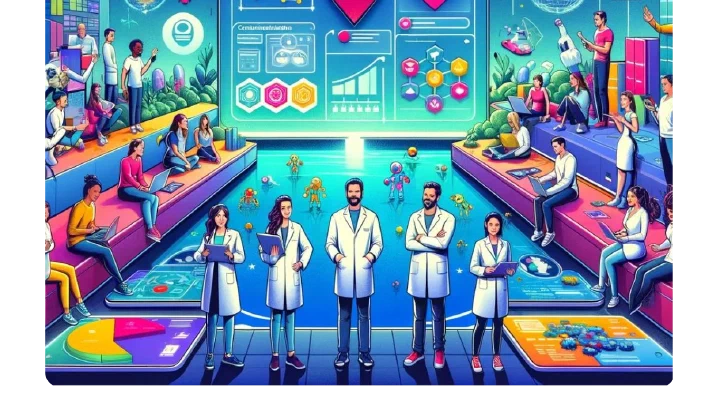
Canal Ciência Project
A research project in partnership with IBICT and funded by FINATEC, aimed at enhancing the user experience of the Canal Ciência through the use of gamification.
See projectSupervisory Experience
Products 3
Galactic Journey, a Gamification for the Canal Ciência Portal.
Digital platform by CEDIS/UnB to support the design, management, and analysis of gamified educational and collaborative experiences with integrated analytics.
The Academic Management Support System - SAGA is a tool developed to assist academic managers in monitoring indicators for undergraduate courses.
Current projects 4

A3M: Educational innovation with active methodologies
Ongoing project associated with the Learning for the Third Millennium Program, focused on educational innovation, active methodologies, and learning indicators at the University of Brasília.
See project
Digital innovation and gamification for teaching, outreach, and software engineering
Ongoing umbrella project focused on research and development of digital strategies, gamification, indicators, and educational products for teaching, science outreach, and software engineering.
See project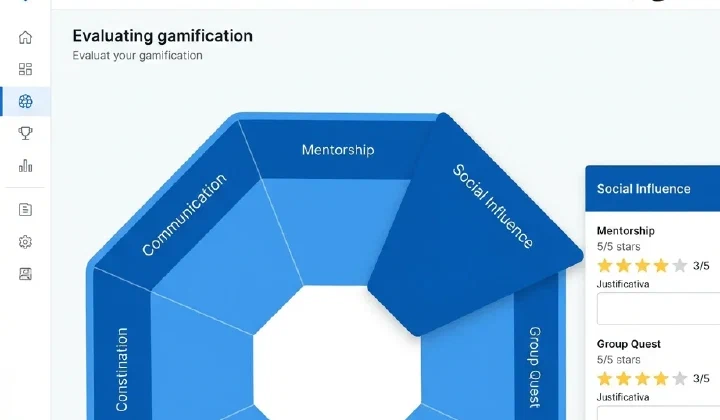
OctaAnalysis Project
Ongoing CEDIS project focused on the research, design, validation, and continuous evolution of methods and infrastructures for gamification and learning analytics, with OctaAnalysis as its resulting product.
See project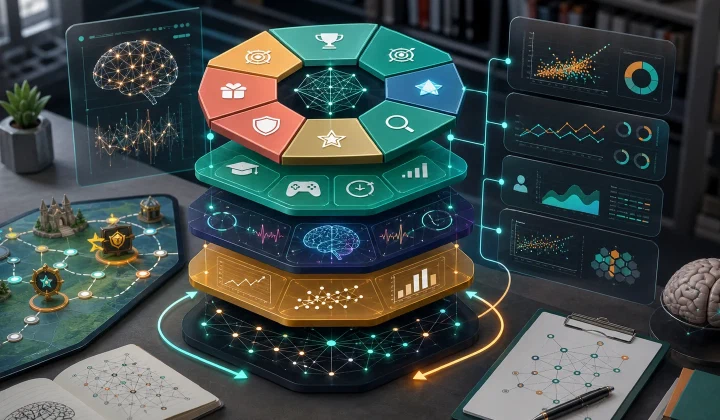
Predictive framework for student engagement and performance in gamified learning environments
2025-2026 PIBIC project focused on creating a predictive framework for student engagement and performance in gamified learning environments by combining Octalysis, neuroscientific indicators, learning analytics, and machine learning.
See projectCurrent Supervisions 5
CEDIS volunteer
Carlos Eduardo Mendes de Mesquita
Project on Gamification Literature Review
Bachelor of Software Engineering - University of Brasília (Brazil)•2025
TopicsDiogo Oliveira Ferreira
Project on Gamification Literature Review
Bachelor of Software Engineering - University of Brasília (Brazil)•2025
TopicsGabriel Santos Pinto
Project on Gamification Literature Review
Bachelor of Software Engineering - University of Brasília (Brazil)•2025
TopicsMaciel Ferreira Custódio Junior
Project on Gamification Literature Review
Bachelor of Software Engineering - University of Brasília (Brazil)•2025
TopicsPietro Calegari Visentin
Project on Gamification Literature Review
Bachelor of Software Engineering - University of Brasília (Brazil)•2025
Topics
Postgraduate Specialization
- 2010
Antônio Henrique Braz Filho
Proposal for Improving a Software Product Supported by the Evaluation of Quality Characteristics
Specialization in Software Engineering, Catholic University of Brasília (Brazil)
Advisor(s)Topics - 2010
Diogo Alves Miranda
Proposal for Improving a Maintenance Process
Specialization in Software Engineering, Catholic University of Brasília (Brazil)
Advisor(s)Topics - 2010
Igor Marrocos
Analysis and Resolution of Problem Causes: Proposing Improvements to Software Processes
Specialization in Software Engineering, Catholic University of Brasília (Brazil)
Advisor(s)Topics - 2010
Maria Eva Macedo
Proposal for Improving the Project Management Process for a Software Factory
Specialization in Software Engineering, Catholic University of Brasília (Brazil)
Advisor(s)Topics - 2010
Nívia C. Queiroz
Application of a Method for Reverse Engineering in Legacy Systems
Specialization in Software Engineering, Catholic University of Brasília (Brazil)
Advisor(s)Topics - 2009
Diego J. Macêdo
Using GQM to Evaluate the Maintenance Complexity of Legacy Systems
Specialization in Software Engineering, Catholic University of Brasília (Brazil)
Advisor(s)Topics - 2009
Leonardo Lima de Menezes
A Study on the Practice of the Requirements Validation Activity in Companies
Specialization in Software Engineering, Catholic University of Brasília (Brazil)
Advisor(s)Topics - 2009
Pauliane Alves de Paula
Proposal for Associating an Agile Development Process with the Use of a CASE Tool
Specialization in Software Engineering, Catholic University of Brasília (Brazil)
Advisor(s)Topics - 2009
Rafael Sermenho Pedroso
Evaluation of Legacy Systems in Delphi
Specialization in Software Engineering, Catholic University of Brasília (Brazil)
Advisor(s)Topics - 2009
Renato de Oliveira Silva
Mapping and Proposal for Improvement of a Software Maintenance Process
Specialization in Software Engineering, Catholic University of Brasília (Brazil)
Advisor(s)Topics - 2008
Tiago Souza Fraga
Proposal of a Software Development Process for Small Teams
Specialization in Software Engineering, Catholic University of Brasília (Brazil)
Advisor(s)Topics - 2007
Márcios Messias Fernandes da Silva
Use of Function Point Analysis to Measure the Size of Workflow Systems
Specialization in Project Engineering in Information Systems, UniCESP (Brazil)
Advisor(s)Topics - 2006
Carlos Renato dos Santos Ramos
Effort Estimation for Software Maintenance: A Preliminary Investigation
Specialization in Project Engineering in Information Systems, UniCESP (Brazil)
Advisor(s)Topics - 2006
Lúcia Freire Vieira, Janaína Almeida de Deus
Essential Documentation for Evaluating Legacy Systems: A Preliminary Study
Specialization in Project Engineering in Information Systems, UniCESP (Brazil)
Advisor(s)Topics
Undergraduate Research
Wildemberg Sales da Silva Junior
Undergraduate in Software Engineering at the University of Brasília; PIBIC undergraduate research advisee of Prof. Cristiane Ramos in the Canal Ciência Project.
Studies for the Gamification of the Science and Technology Popularization and Dissemination Platform: Gamification Modeling and Treatment of Motivational Indicators
Bachelor of Software Engineering - University of Brasília (Brazil)•2025
Advisor(s)Undergraduate in Software Engineering at the University of Brasília; PIBIC undergraduate research advisee of Prof. Cristiane Ramos in the Canal Ciência Project.
Gamification of the Canal Ciência Portal: Jornada Galáctica and motivational profiles
Bachelor of Software Engineering - University of Brasília (Brazil)•2024
Advisor(s)Matheus Afonso de Souza
Supporting testing activities for apps and research
Undergraduate Research•2021
Advisor(s)Mariana de Souza Mendes
Supporting activities for app testing
Undergraduate Research•2020
Advisor(s)Natália Maria Rodrigues Queiroz
Reports of digitized services via manual testing
Undergraduate Research•2018
Advisor(s)Priscila Yukie Yamada
Diagnostics and service modeling for government agencies
Undergraduate Research•2018
Advisor(s)TopicsRonyell Henrique dos Santos
Maintenance and test automation activities
Undergraduate Research•2018
Advisor(s)Shayane Marques Alcantara
Identification, modeling, and prototyping of services
Undergraduate Research•2018
Advisor(s)TopicsVictor Hugo Arnaud Deon
Development of tools for service automation
Undergraduate Research•2018
Advisor(s)TopicsRamy da Silva Alcântara
Improvement of the embedded software development process
Undergraduate Research•2011
Advisor(s)TopicsWagner Jerônimo Santos
Definition of a quality assurance process based on a process component architecture
Undergraduate Research•2011
Advisor(s)Guilherme B. Rêgo
Comparative analysis of embedded, critical, and safe software acquisition process models in the automotive industry context
Undergraduate Research•2010
Advisor(s)TopicsHenrique Santos
Comparative analysis between software acquisition process models and Normative Instruction No. 04
Undergraduate Research•2010
Advisor(s)Topics
Bachelor’s Thesis
- 2025
Denniel William Roriz Lima
Senior Project (Bachelor of Software Engineering) - University of Brasília (Brazil)
Topics - 2025
Luana Souza Silva Torres
Development process for collaborative projects: the Agromart experience
Senior Project (Bachelor of Software Engineering) - University of Brasília (Brazil)
Advisor(s)Topics - 2024
Daniel Barcelos Moreira, Juliana Pereira Valle Gonçalves
Accessibility evaluation tools for websites used by older adults: guidelines to support selection
Senior Project (Bachelor of Software Engineering) - University of Brasília (Brazil)
Topics - 2024
Eduardo Miranda Roriz, Ian Pereira de Souza Rocha
Data quality in a big data environment: a systematic mapping
Senior Project (Bachelor of Software Engineering) - University of Brasília (Brazil)
Advisor(s) - 2024
Nathalia Lorena Cardoso Dias
Bachelor of Software Engineering - University of Brasília (Brazil)
Advisor(s)Topics - 2023
Giulia Lobo Barros
Improvement of a software requirements engineering process
Bachelor of Software Engineering - University of Brasília (Brazil)
Topics - 2023
Ricardo de Castro Loureiro
Bachelor of Software Engineering - University of Brasília (Brazil)
Topics - 2022
Amanda Emilly Muniz de Menezes, Letícia Karla Soares Rodrigues de Araújo
Identifying Factors Affecting Dropout in Higher Education
Senior Project (Bachelor of Software Engineering) - University of Brasília (Brazil)
TopicsIdentifying factors that influence academic dropout is crucial for coordinators to take preventive actions against student desertion. This thesis aims to explore the current state of research in the field, seeking to understand the main factors associated with academic dropout and how they can be applied in predictive models of dropout. A quantitative, exploratory, and explanatory applied research was conducted, using case study techniques and bibliographic research. The systematic literature review indicated that dropout could be predicted by academic, demographic, and learning factors. Using these factors, predictive models were developed with the help of machine learning algorithms, whose predictions proved sensitive to changes in course flows. It concludes that academic, demographic, and learning factors are effective in predicting dropout, with the selection and application method of these factors being crucial for achieving accurate predictive results. Moreover, the application of academic factors in predictive models requires consideration of the specific context of the analyzed data. - 2022
Fabiana Luiza Vasconcelos Pfeilsticker Ribas
Accessibility analysis for older adults in e-Gov services - a case study
Senior Project (Bachelor of Software Engineering) - University of Brasília (Brazil)
- 2022
Gabriel Batista Albino Silva, Helena Bretas Goulart
Senior Project (Bachelor of Software Engineering) - University of Brasília (Brazil)
Advisor(s) - 2021
Allan Jefrey Pereira Nobre
Senior Project (Bachelor of Software Engineering) - University of Brasília (Brazil)
Advisor(s) - 2021
Ateldy Borges Brasil Filho
Gamification evaluation: a practical application in a junior enterprise
Senior Project (Bachelor of Software Engineering) - University of Brasília (Brazil)
Advisor(s)Topics - 2021
Augusto Moreno Vilarins Cardoso da Silva, Ícaro Pereira de Oliveira
Usability information extraction from app comments on the Play Store
Senior Project (Bachelor of Software Engineering) - University of Brasília (Brazil)
- 2021
Filipe Toyoshima Silva
State of practice of software maintenance in the context of early-stage software startups
Senior Project (Bachelor of Software Engineering) - University of Brasília (Brazil)
Advisor(s) - 2020
Gustavo Vieira Braz Gonçalves, Luiz Guilherme S da Silva
Development of a software solution for fleet management, a practical application
Senior Project (Bachelor of Software Engineering) - University of Brasília (Brazil)
Advisor(s)Topics - 2020
Lucas Gomes Pereira
Applying Gamification Techniques to the Team-Based Learning Methodology: Applying Octalysis in TBL Phase 1
Senior Project (Bachelor of Software Engineering) - University of Brasília (Brazil)
Advisor(s)Topics - 2020
Rafael Contessotto Bragança Pinheiro
Senior Project (Bachelor of Software Engineering) - University of Brasília (Brazil)
Topics - 2020
Sannya Santana de Arvelos
Planning software process improvement based on issue analysis
Senior Project (Bachelor of Software Engineering) - University of Brasília (Brazil)
- 2019
Victor Hugo Arnaud Deon
PGTBL - Team-Based Learning management platform
Senior Project (Bachelor of Software Engineering) - University of Brasília (Brazil)
Topics - 2013
Antonio Bezerra da Silva Júnior
Tool support for the quality assurance process: QUASAR - Software Quality and Results Assessment
Senior Project (Bachelor of Software Engineering) - University of Brasília (Brazil)
Advisor(s)
Recent output
Featured publications
Gamifying Science Communication: An Experience Report of Jornada Galáctica at Canal Ciência
Cristiane Soares Ramos, Sergio Antônio Andrade de Freitas, Mylena Angélica Silva Farias, Wildemberg Sales da Silva Junior, Marcus Vinícius Paiva Martins, Leda Cardoso Sampson Pinto
Digital Transformation of Public Services in a Startup-Based Environment: Job Perceptions, Relationships, Potentialities and Restrictions
MARSICANO, G. C., CANEDO, EDNA, RAMOS, C. S., FIGUEIREDO, R. M. C., PEDROSA, G. V.
Implementing Neuroscientific Principles in Gamified Software Engineering Courses
Sergio Antônio Andrade Freitas, Cristiane S. Ramos, Eduardo Bessa Pereira da Silva, Marcia Renata Mortari, Dianne Magalhaes Viana
Publications 16
- 2026
Cristiane Soares Ramos, Sergio Antônio Andrade de Freitas, Mylena Angélica Silva Farias, Wildemberg Sales da Silva Junior, Marcus Vinícius Paiva Martins, Leda Cardoso Sampson Pinto
Gamifying Science Communication: An Experience Report of Jornada Galáctica at Canal Ciência
The 26th International Conference on Computational Science and Its Applications (ICCSA 2026), p3-20 • Braga, Portugal
- 2024
Cristiane S. Ramos, Dianne M. Viana, Eduardo Bessa, Márcia R. Mortari, Sergio Antônio Andrade Freitas
Learning Indicators as Tools for Continuous Improvement in the Educational Environment
PAEE/ALE 2024 - International Conference on Active Learning in Engineering Education, p245-254 • San Andrés Islas - Colombia
TopicsISSN: 2183-1378In today's fast-paced world characterized by rapid knowledge evolution and increasing information valuation, the education sector faces unprecedented challenges. These challenges require a continuous commitment to the evaluation and enhancement of pedagogical practices, adapting them to emerging needs and challenges. In this context, learning indicators emerge as fundamental instruments, offering detailed insights into the efficiency of active learning methods and strategies, and student progress in the development of essential competencies. This article is dedicated to exploring the implementation of two key indicators in the educational environment, aiming at optimizing the quality of teaching and learning in engineering course disciplines. The first indicator analyzed focuses on identifying students' prior knowledge and assimilating new concepts, fundamental for meaningful learning. The second indicator seeks to evaluate the consolidation of engrams, that is, the formation and reinforcement of memories related to learned concepts, allowing the identification of gaps in the teaching-learning process. It is argued that the adoption of these indicators, among others, is necessary for effective educational management, allowing not only the monitoring and evaluation of pedagogical practices but also the planning of precise and well-founded interventions to establish an inclusive, efficient, and motivating learning environment. - 2024
Cristiane S. Ramos, Mylena Angélica S. Farias, Sergio Antônio Andrade Freitas, Marcus Vinícius Paiva Martins, Juan Mangueira Alves, Leda Cardoso S. Pinto
A Process to Identify Players’ Motivational Profiles for Designing a Gamification Project
24th International Conference on Computational Science and Its Applications - ICCSA 2024, p49-67 • Hanoi, Vietnam
This article presents an innovative process for identifying the motivational profiles of a specific target audience using three distinct strategies: assessment by judges, application of game dynamics, and the Intrinsic Motivation Inventory (IMI) questionnaire. Each strategy aims to align with the Octalysis framework, emphasizing the importance of personalization and adaptability in gamification. The process is tested on a gamification project within a Brazilian government portal for scientific dissemination, focusing on engaging Brazilian students in science. The analysis reveals differences in strategy outcomes, highlighting the requirement of a multifaceted approach to accurately capture the target audience’s motivational profiles and improve gamification effectiveness. - 2024
LACERDA, A. R. T., FREITAS, S. A. A., RAMOS, C. S.
Gamified Chatbot Management Process: A way to build gamified chatbots
10th Intelligent Systems Conference • Amsterdam, The Netherlands
TopicsThis paper proposes the incorporation of gamification with machine learning for the development of chatbots. The Gamified Chatbot Development Process (GCMP), is a process for the development of gamified chatbots, it comprises eight activities, arranged into four steps, emphasizing gamification implementation. This process includes gamification planning, gamification management, updating chatbot content, chatbot behavior implementation, chatbot behavior validation, chatbot behavior analysis, chatbot delivery, and chatbot usage analysis. GCMP provides a clear and structured guide, allowing flexibility to accommodate each project’s specific requirements. This article describes the methodology employed, which includes the application of an experiment with software engineering students. The experiment is conducted by providing documents, holding weekly meetings, and collecting pertinent data. The applicability of GCMP in gamified chatbot projects is examined, and a new version of the process is proposed to resolve the gaps found, and conclusions are drawn based on experiments. - 2024
MARSICANO, G. C., CANEDO, EDNA, RAMOS, C. S., FIGUEIREDO, R. M. C., PEDROSA, G. V.
Digital Transformation of Public Services in a Startup-Based Environment: Job Perceptions, Relationships, Potentialities and Restrictions
JOURNAL OF UNIVERSAL COMPUTER SCIENCE, 30(6) (720-757)
- 2024
Sergio Antônio Andrade Freitas, Cristiane S. Ramos, Eduardo Bessa Pereira da Silva, Marcia Renata Mortari, Dianne Magalhaes Viana
Implementing Neuroscientific Principles in Gamified Software Engineering Courses
Frontiers in Education 2024 • Washington DC, USA
- 2024
Sergio Antônio Andrade Freitas, Mylena Angélica S. Farias, Cristiane S. Ramos, Marcus Vinícius Paiva Martins, Juan Mangueira Alves, Leda Cardoso S. Pinto
Crafting Personalized Learning Environments Through Motivational Profiling
2024 IEEE Frontiers in Education Conference (FIE), p1-9 • Washington, DC, USA
- 2023
MARSICANO, GEORGE, CANEDO, EDNA, PEDROSA, GLAUCO, RAMOS, CRISTIANE, FIGUEIREDO, REJANE
Digital Transformation of Public Services from the Perception of ICT Practitioners in a Startup-Based Environment
25th International Conference on Enterprise Information Systems, p490 • Prague
- 2023
RAMOS, C. S., VIANNA, D. M., BESSA, E., MORTARI, M. R., FREITAS, S. A. A.
Biblioteca Central da Universidade de Brasília
ISBN: DOI: 10.26512/plunb.442 | ISBN: 978-65-980478-0-1 Spotify - 2023
SILVA, E. C., FREITAS, S. A. A., RAMOS, C. S., MENEZES, A. E. M., ARAUJO, L. K. S. R.
56th Hawaii International Conference on System Science • Maui
- 2022
Cristiane Soares Ramos, Ricardo Ajax Dias Kosloski, Vítor Gomes de Menezes, Letícia de Souza Santos, Rejane Maria da Costa Figueiredo, Vanessa de Andrade Soares, Anderson Jefferson Cerqueira, Laura Barros Martins
Systematic mapping of the literature on digital government strategies: technical report
Brasília, DF, Brasil
Topics - 2019
CALAZANS, Angelica Toffano Seidel, MASSON, E., SOUZA, M., BRITO, I., PALDES, R., KOSLOSKI, RICARDO AJAX DIAS, RAMOS, C. S., GUIMARAES, F.
Higher Education with Active Methodologies: How to Put Them into Practice
Editora Itacaiúnas
TopicsISBN: 978-85-9535-158-5 - 2019
KOSLOSKI, RICARDO AJAX DIAS, RAMOS, CRISTIANE SOARES, CANEDO, E. D., GOULART, H. B.
Aprendizagem baseada em projetos aplicada em uma disciplina de integração de Engenharias: desafios e benefícios
Simpósio Brasileiro de Informática na Educação (SBIE) • Brasilia
Topics - 2018
RAMOS, CRISTIANE SOARES, KOSLOSKI, Ricardo Ajax Dias, VENSON, ELAINE, DA COSTA FIGUEIREDO, REJANE M., DEON, VICTOR HUGO A.
TBL as an active learning-teaching methodology for software engineering courses
the XXXII Brazilian Symposium, p289 • Sao Carlos
Topics - 2015
RAMOS, C. S., OLIVEIRA, K. M., ROCHA, A. R. C.
Critical issues in SPI Programs: A Holistic View
The First International Conference on Advances and Trends in Software Engineering, p60-66 • Barcelona
- 2015
RAMOS, C. S., OLIVEIRA, K. M., ROCHA, A. R. C.
Planejamento de Programa de Melhoria Abordagem Multimodelo
Simpósio Brasileiro de Qualidade de Software, p79-93 • Manaus
Topics
Academic Background
- Professional Master’s in Knowledge Management and Information Technology - Catholic University of Brasília (UCB), Brazil (2002-2004), in the software engineering area with a focus on software quality.
- Bachelor’s in Data Processing - Catholic University of Brasília (UCB), Brazil (1996-1997).
- Bachelor’s in Computer Science - Catholic University of Brasília (UCB), Brazil (1993-1996).
- Complementary training in software quality, metrics and measurement, MPS.Br, CMMI, scientific methodology, distance education, neuroscience in teaching, and active learning strategies.
Connect your next research move to this profile
Use these paths to propose supervision, collaboration, an applied product, or an institutional partnership with CEDIS.