
CEDIS presents the CEDIS Ecosystem: six products, one journey from content to insight
Deck Manager, Slides, Concept Studio, Atlas do Conhecimento, Learning Passport and Learning Analytics now form an integrated family, with its own visual identity and privacy by design, to turn content into learning experiences.
Brasilia, August 9, 2026
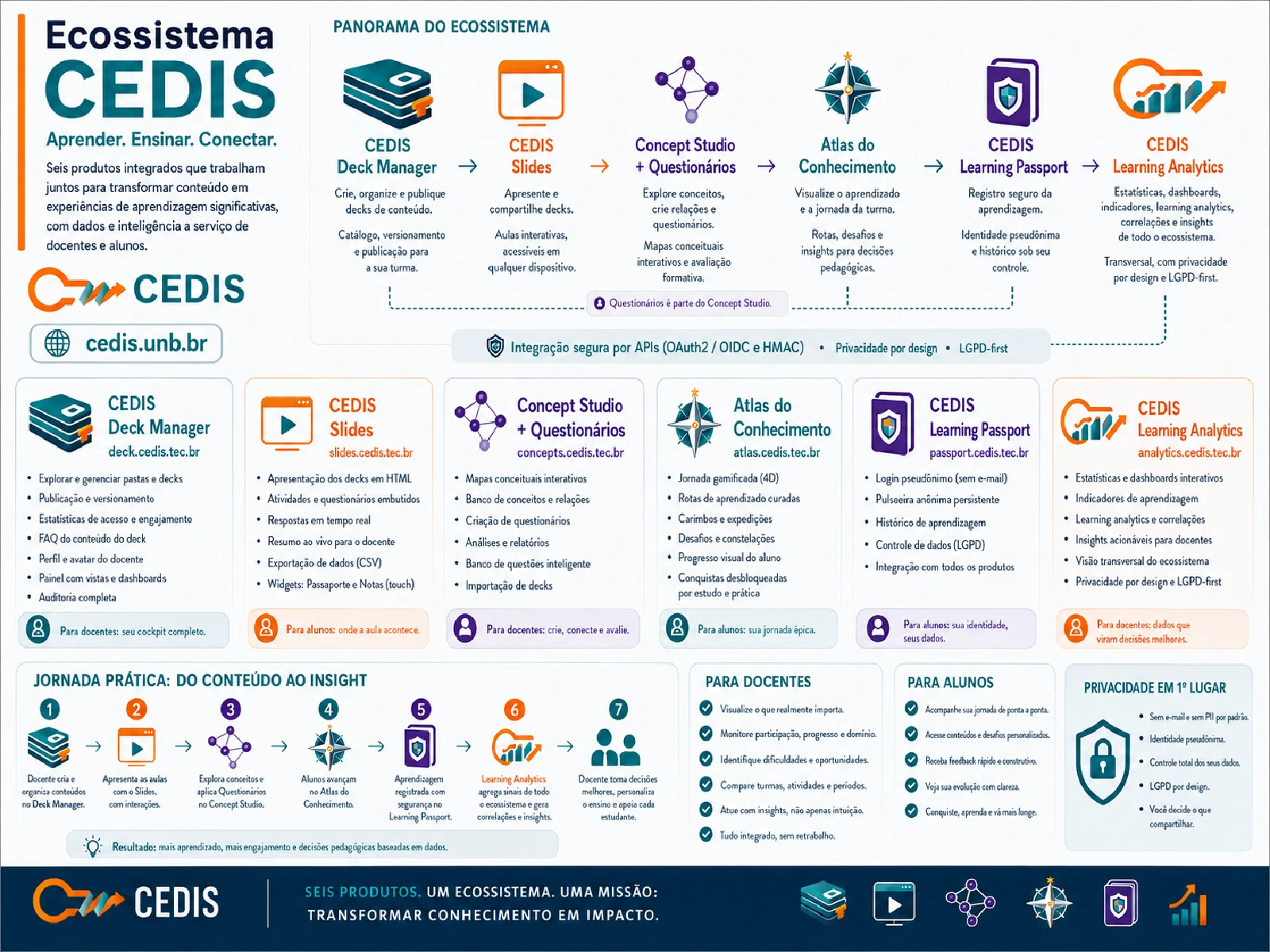
Learn. Teach. Connect. Under that motto, CEDIS presents the CEDIS Ecosystem: six integrated products that work together to turn content into meaningful learning experiences, with data and intelligence at the service of teachers and students. Six products, one ecosystem, one mission — turning knowledge into impact.
The family was born in July, with the CEDIS Deck Manager , and today gains its own visual identity and five new members. Each is an independent application, with its own address and database; they talk to one another through secure APIs, and no service blocks another — if one goes down, the class goes on.
Who does what
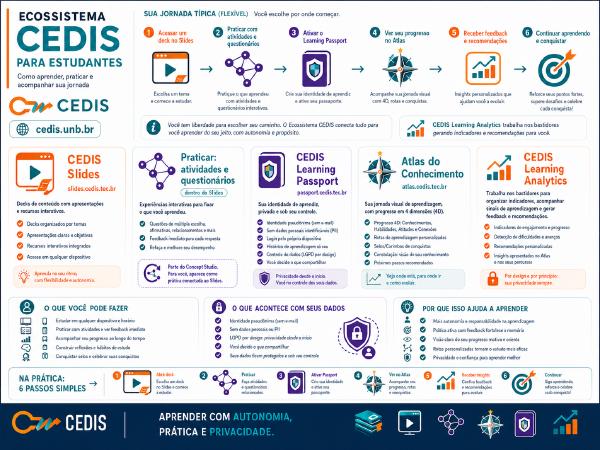
The Deck Manager is the teacher’s cockpit: create, organise, version and publish decks. CEDIS Slides is where the class happens: decks presented on any device, with activities and real-time answers. Concept Studio is the studio of concepts — maps, relations and questionnaires that reach students inside Slides. The Atlas do Conhecimento (Knowledge Atlas) is the student’s journey: progress along four dimensions, routes, stamps and constellations. The Learning Passport is the pseudonymous identity that records all of it without an e-mail or any personal data. And Learning Analytics works backstage, turning signals from the whole ecosystem into indicators and insights.
The journey in seven steps
The teacher creates the content in the Deck Manager, delivers it in Slides, explores concepts and applies questionnaires in Concept Studio; students move forward in the Atlas, with their learning recorded in the Passport; Learning Analytics aggregates and correlates; the teacher decides better and supports each student. What the ecosystem is after is simple to state: more learning, more engagement, and pedagogical decisions grounded in data.
Privacy first
No product in the family stores an e-mail or identifiable personal data by default. The student’s identity is pseudonymous; there is no public ranking; every aggregate respects k-anonymity; and it is the student who decides what to share — and when to erase everything. The LGPD is not a banner here: it is the design.
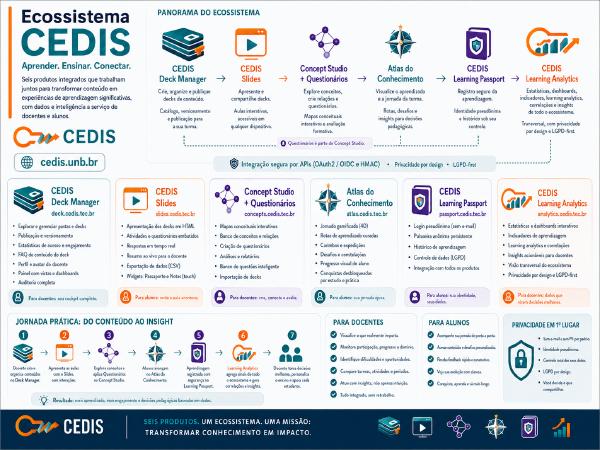
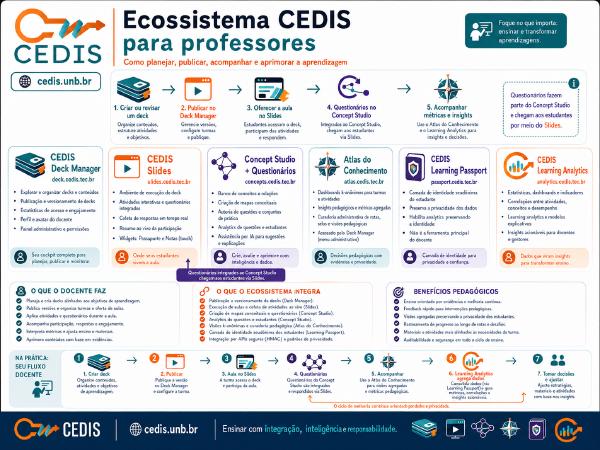
The three infographics below summarise the ecosystem for the general public, for teachers and for students.
The ecosystem is coordinated by Prof. Sergio Freitas and is open source, under the MIT licence, at github.com/cedis-unb/CEDIS-Deck-Manager. The full description is on the CEDIS Ecosystem project page .